Most Odor Removal calls follow smoke, pet, or residual odor home remedies haven't resolved. Our Wharton team finds the actual source first.
Speak With A Specialist
Here's what backs every Odor Removal call Trauma Clean Pros takes in Wharton.

Every Wharton crew carries multiple treatment technologies, since sources respond differently.
Credentials are the baseline for every Odor Removal call Trauma Clean Pros takes.
Our Wharton dispatch pulls from a nearby crew, not a distant hub.
We quote after identifying the source, so Wharton clients know the real cost first.
Every Odor Removal job starts with identifying the actual source, since treating the wrong cause just brings the odor back.

We treat HVAC separately when ducts contribute to odor that keeps returning.
Technicians trace odor to its actual source before recommending any treatment.
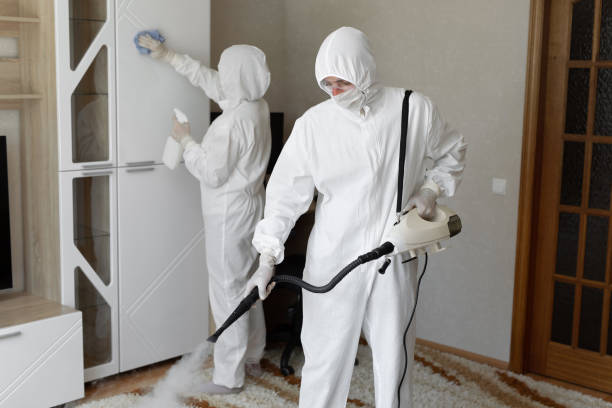
Thermal fogging penetrates the same pathways smoke did, reaching residue surface cleaning misses.
Pet odor often means urine soaked into subfloor, treated at the source, not masked.
Odor left after a biohazard cleanup gets extended ozone or hydroxyl sessions until fully resolved.
Musty odor tied to moisture gets addressed alongside any underlying mold issue.
A dispatcher at +1-844-401-0166 asks about odor type and duration before scheduling an assessment.
Once scheduled, a technician arrives to begin source identification.
After identifying the source, technicians provide a written flat-rate quote for treatment.
We don't finish until odor testing confirms it's gone, with a no-charge return if anything lingers.

"We tried everything ourselves for months. They found the actual source in the subfloor on the first visit." — S. Vega
"Pet odor we thought was permanent turned out to be treatable once they found where it soaked in." — P. Nwachukwu
"After a biohazard cleanup elsewhere, the odor stuck around. This crew ran treatment until it was actually gone." — K. Whitfield
"Turned out our ductwork was recirculating the smell — they caught that when nobody else had." — N. Oduya
"They treated the HVAC too, which turned out to be part of the problem." — Z. Adegoke

Coverage spans Wharton and beyond, for both quick assessments and extended treatment.

Ozone is effective but requires an empty space, unlike hydroxyl generators which work in occupied rooms.
Most jobs resolve within one to three days of active treatment.
If the actual source was treated, recurrence is uncommon; we test before closing to confirm.
Every job gets a flat-rate quote after source identification.
Often yes, if the source hasn't saturated porous material; assessment tells us which approach fits.
Yes, we regularly treat residual odor left after another company's cleanup didn't fully resolve the source.
We test before closing out the job specifically so we can stand behind the result, and we'll return if it does.
Combining the two is common and often more efficient than scheduling them separately.